Systems for a calmer business.
Field notes on operations, AI, and the systems that let a service business run without running on its owner.
 Systems & AI
Website Contact Form Not Working? How to Catch It Before Leads Disappear
A form can show a thank-you message while the inquiry never reaches anyone. The way to find out is to follow one clearly labeled test from the submit button to the person who is supposed to answer it.
 Systems & AI
Answering Service vs AI Receptionist: How to Choose
A live answering service and an AI receptionist both pick up the phone. The real differences show up on the hard calls, in what happens after the caller hangs up, and in how the bill is metered.
 Systems & AI
Estimate Follow-Up: How Long to Wait and What to Say
The estimate went out and nothing came back. Most of the time that silence is not a no. It is a customer waiting on something, and the follow-up that works is the one aimed at whatever that is.
 Systems & AI
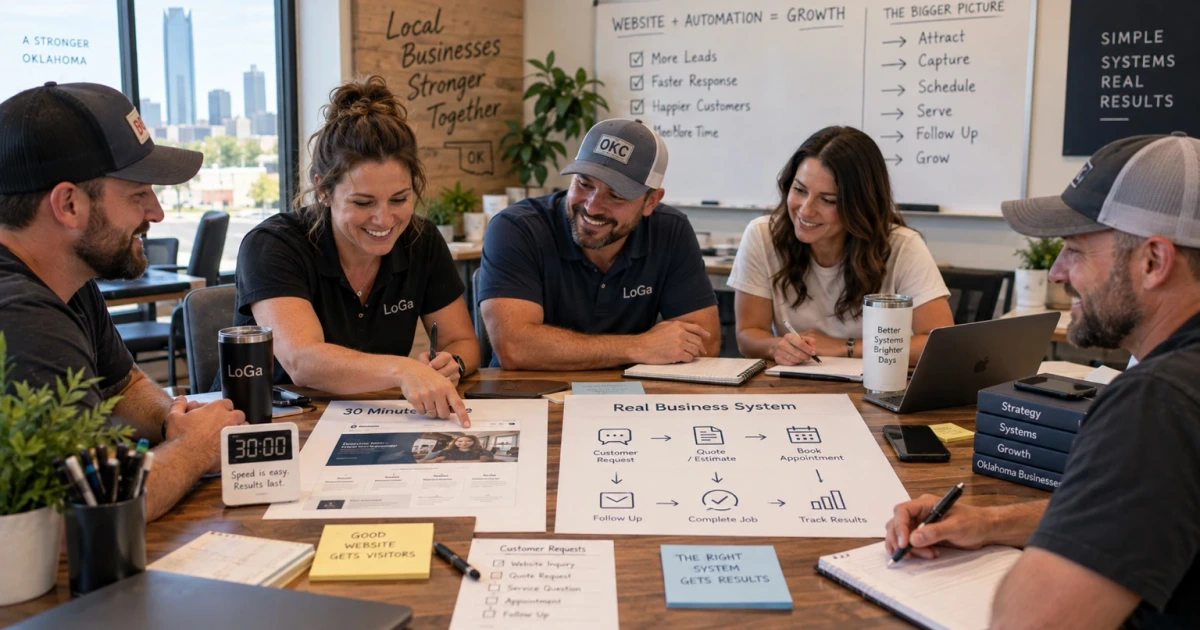
Smart Website vs Simple Website: Can You Build One in 30 Minutes?
You can build most of a website in thirty minutes now. What you cannot build in thirty minutes is the half that is not made of content at all — the answers about how your business runs, which no tool can produce because nobody has written them down.
 Systems & AI
Answer Engine Optimization for Local Businesses: What It Really Means
Your front desk has been running an answer engine for years. The work is moving those answers out of a person's head and into places a machine can read, worded the same way in more than one place.
 Systems & AI
Operations App for Service Business: The Real Use Cases
Most descriptions of these tools are feature lists, which is why so many get bought and then abandoned. The job is narrower: hold one current record of the work in flight, so checking on a job is something you read instead of a conversation you start.
 Systems & AI
Custom Website Oklahoma City: When a Template Stops Being Enough
A template is a very good way to present information and a limited way to move it. The edge shows up after the click — in the order, the booking, the message, the follow-up, the record — and that is where the decision actually gets made.
 Systems & AI
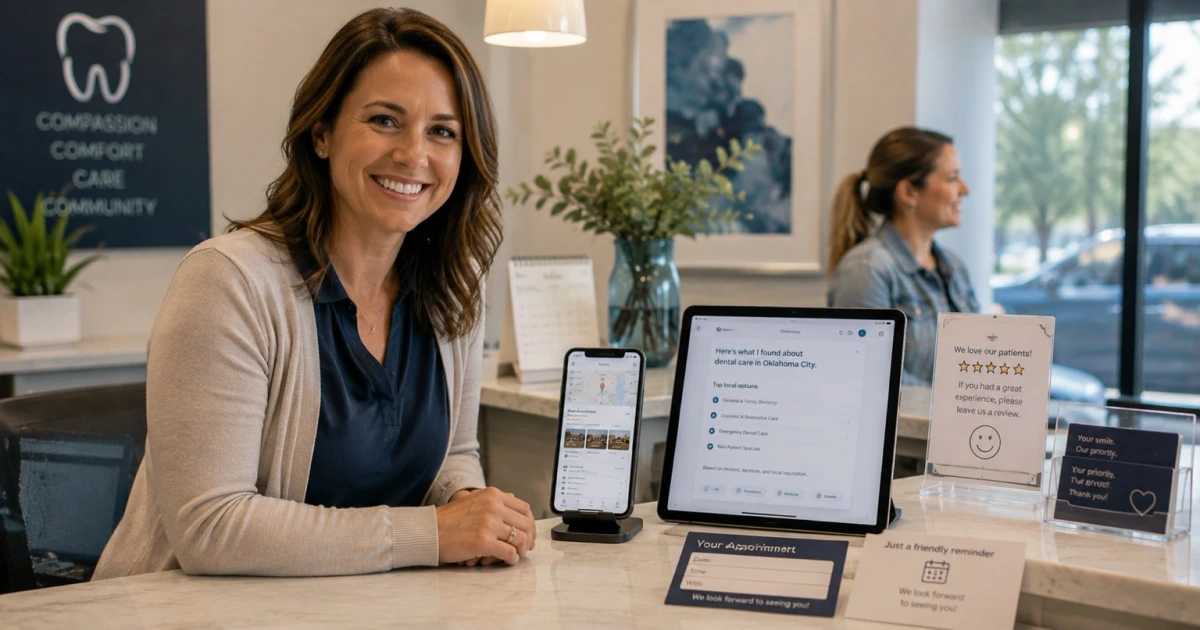
AI Search Local SEO: What Actually Changes for Oklahoma Businesses
AI answers did not change the inputs of local search. They changed what those inputs are read for — from relevance you can write your way into, to corroboration you have to earn by having your records agree. Here is what that means for an Oklahoma business, and what to fix first.
 Systems & AI
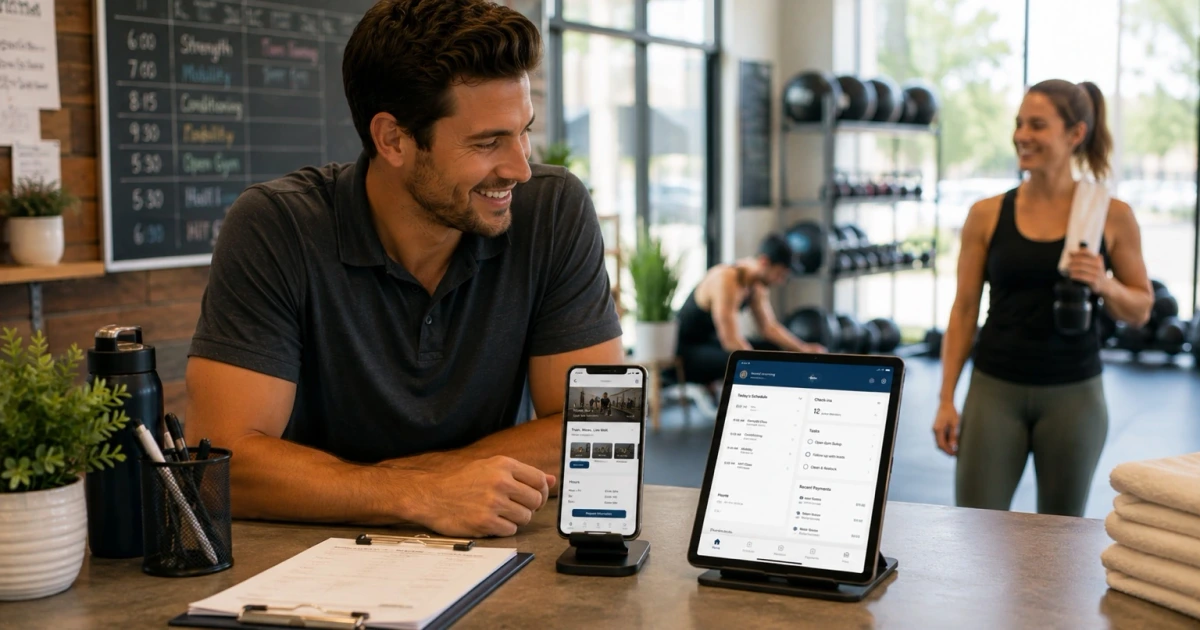
Mobile App vs Mobile Website: Which One Does a Service Business Need?
Someone suggested an app. The website feels dated. Before any of that turns into a quote, it is worth being precise about which of the two you are actually short of — because they do different jobs for different people.
 Systems & AI
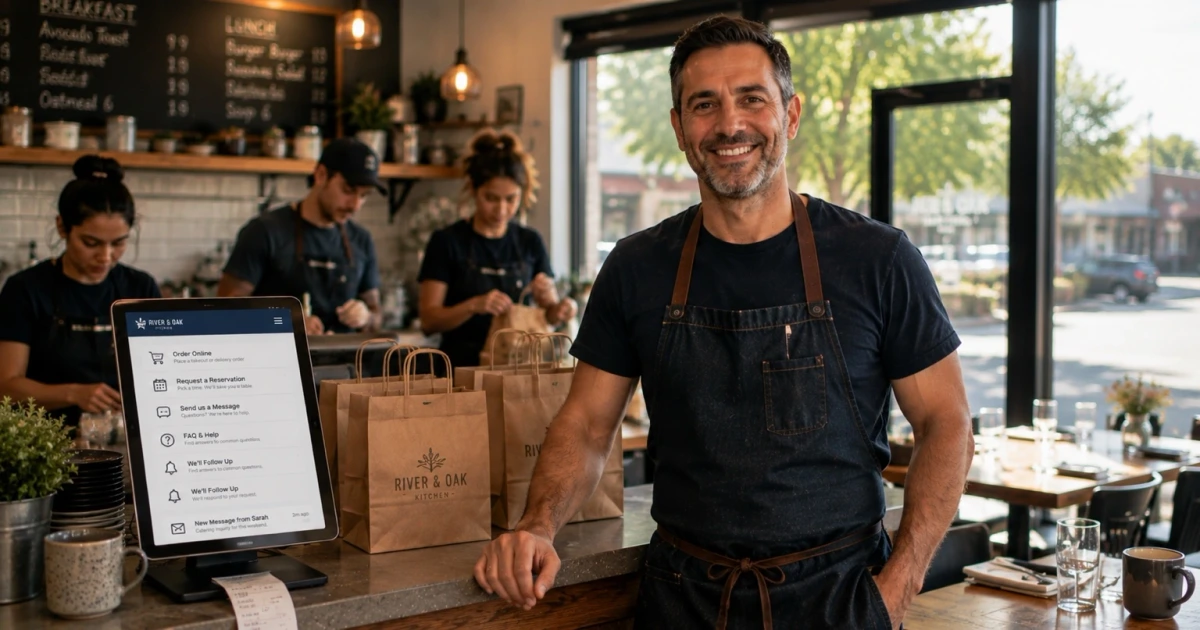
What Makes a Website Smart? The Difference Between a Fast Build and a Useful Build
A website can go live in a weekend now. That is genuinely new. What has not changed is that being live is not the same as doing work — here is the line between a site that looks finished and one that actually earns its place.
 Systems & AI
SEO Company Oklahoma City vs DIY SEO: When the Work Outgrows You
Most owners do not hire help because they failed at SEO. They hire help because the work stopped fitting in the hours they had. Here is the honest line between what an owner can carry alone and what needs a system behind it.
 Systems & AI
Custom Mobile App for Small Business: The Signs You Are Ready
Most owners asking about an app are not asking for an app. They are asking to stop chasing the crew for photos, updates, and paperwork. Here is the honest line between a business that is ready for one and a business that needs something simpler.
 Systems & AI
AI Website Tools for Small Businesses in Oklahoma: What Is Actually Worth It
Chat widgets, smart forms, booking requests, automatic answers, follow-up alerts. Some of it genuinely helps a small business, and some of it is a subscription you will forget you are paying for. Here is how to tell the difference before you buy anything.
 Systems & AI
SEO vs AEO vs GEO: What Oklahoma Businesses Should Prioritize First
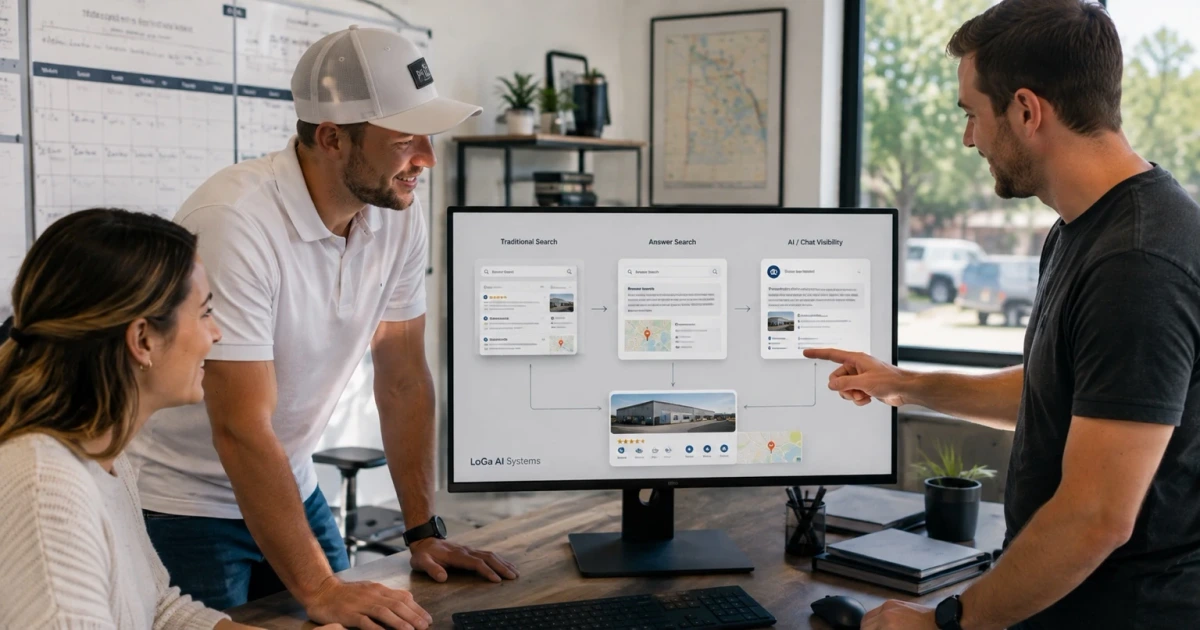
Three acronyms, one question: where should the money go? Here is what SEO, AEO, and GEO actually mean, what genuinely changed when AI started writing the answers, and why the boring local work still comes first for most Oklahoma businesses.
 Systems & AI
Field Service Mobile Apps: What They Should Actually Do
Most field apps fail for the same reason: they were built to report on the crew instead of help them. Here is the short list of what the app has to carry — status, notes, photos, checklists, signatures, schedule, invoice — and what it should never become.
 Systems & AI
Local SEO Oklahoma City: What Still Matters for Service Businesses in an AI Search World
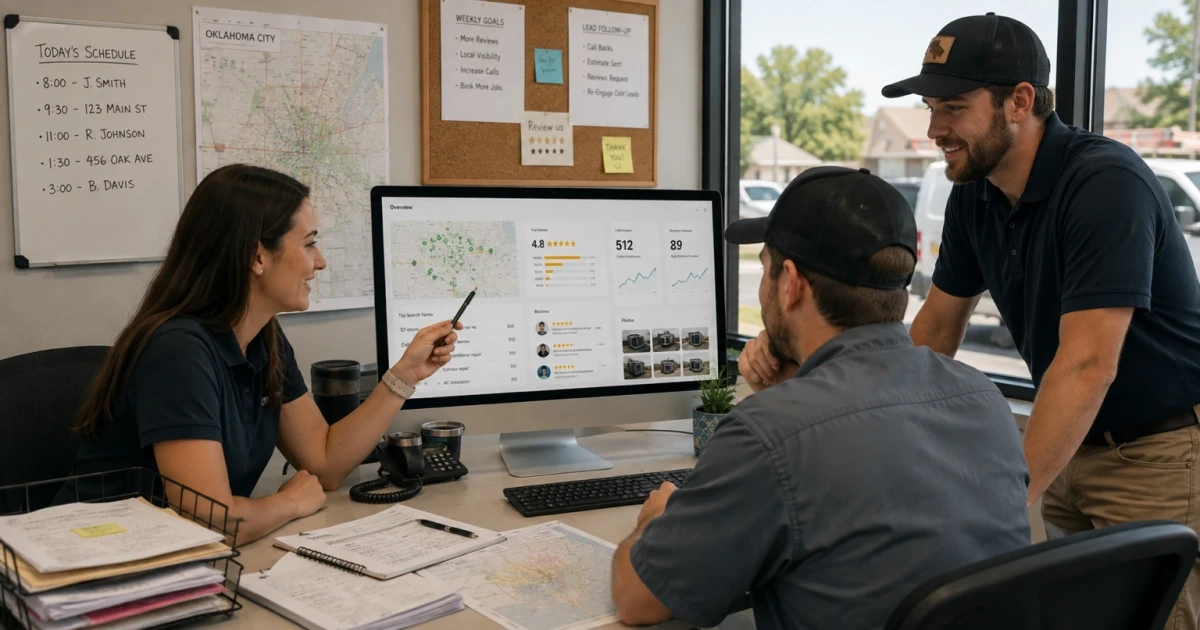
AI answers changed how people search, not what makes a local service business findable. Here's what still earns the call — profile, reviews, real service pages, clean internal links, and a site a machine can actually read.
 Systems & AI
Mobile App Development Oklahoma City: When a Service Business Actually Needs One
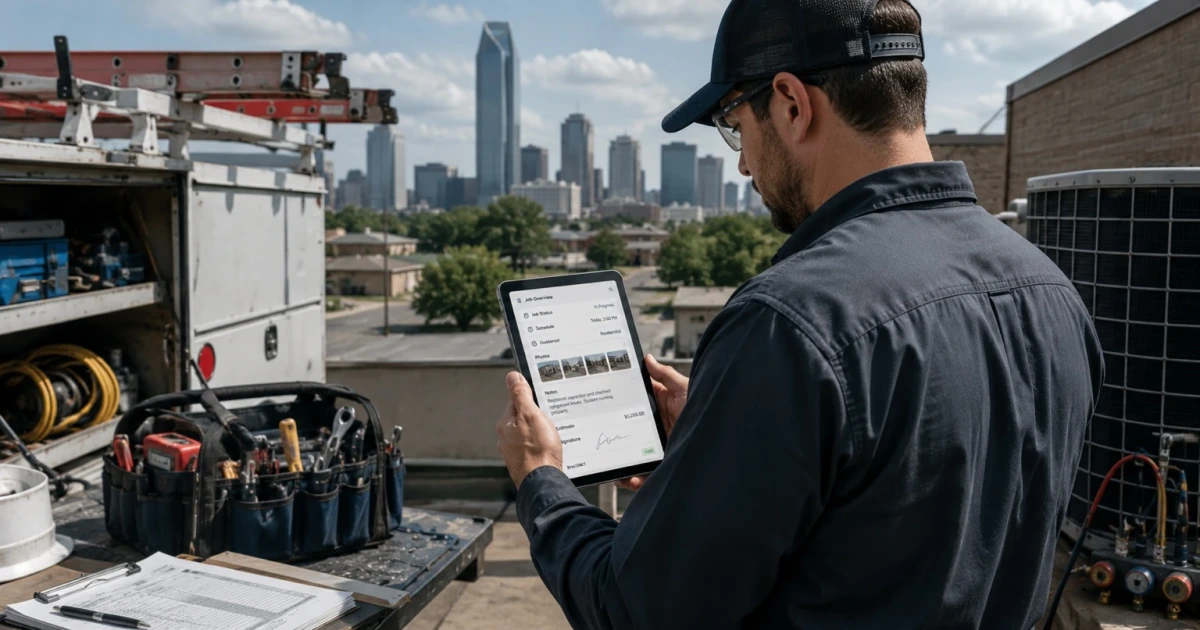
Most owners asking about an app don't want an app. They want to stop calling the crew for updates. Here's the honest line between a service business that needs a field app and one that needs its existing tools connected.
 Systems & AI
What Is an AI Systems Company? A Plain-English Guide for Oklahoma Businesses
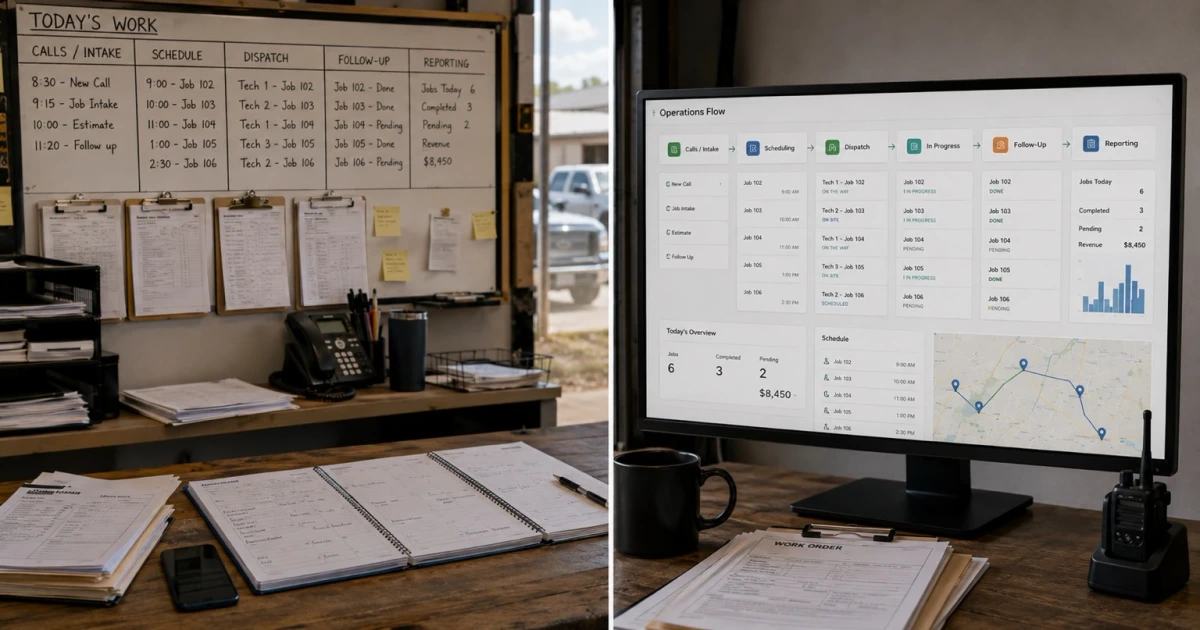
The term sounds like a category of software. It's closer to a category of plumbing. An AI systems company doesn't add AI to your business — it connects the steps your work already moves through, and puts AI only where it earns its place.
 Systems & AI
How to Build a Software System Around Your Service Business, Not the Other Way Around
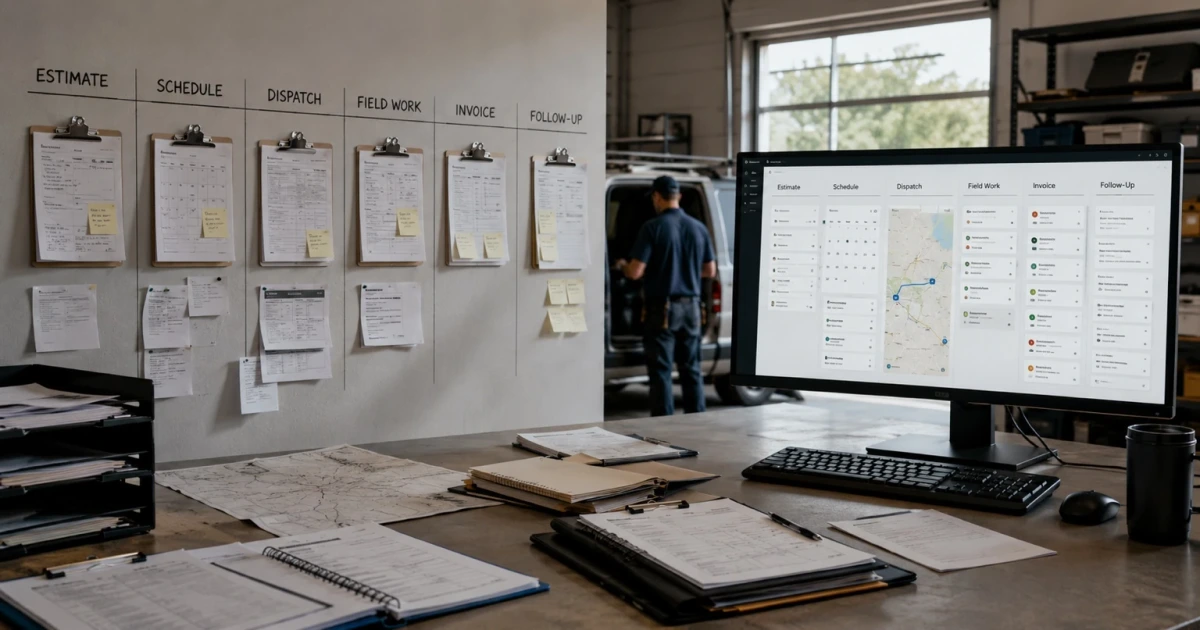
Most software asks the business to change shape to fit it. The better order is the opposite: map how the work already moves—estimate, schedule, dispatch, field work, invoice, follow-up—and build the system around that.
 Systems & AI
AI Follow Up System: How to Stop Leads From Going Cold
A lead doesn't go cold all at once. It goes cold one skipped follow-up at a time—the reminder nobody sent, the quote nobody chased, the silence nobody noticed.
 Systems & AI
Custom Software for Service Businesses: When a Spreadsheet Stops Being Enough
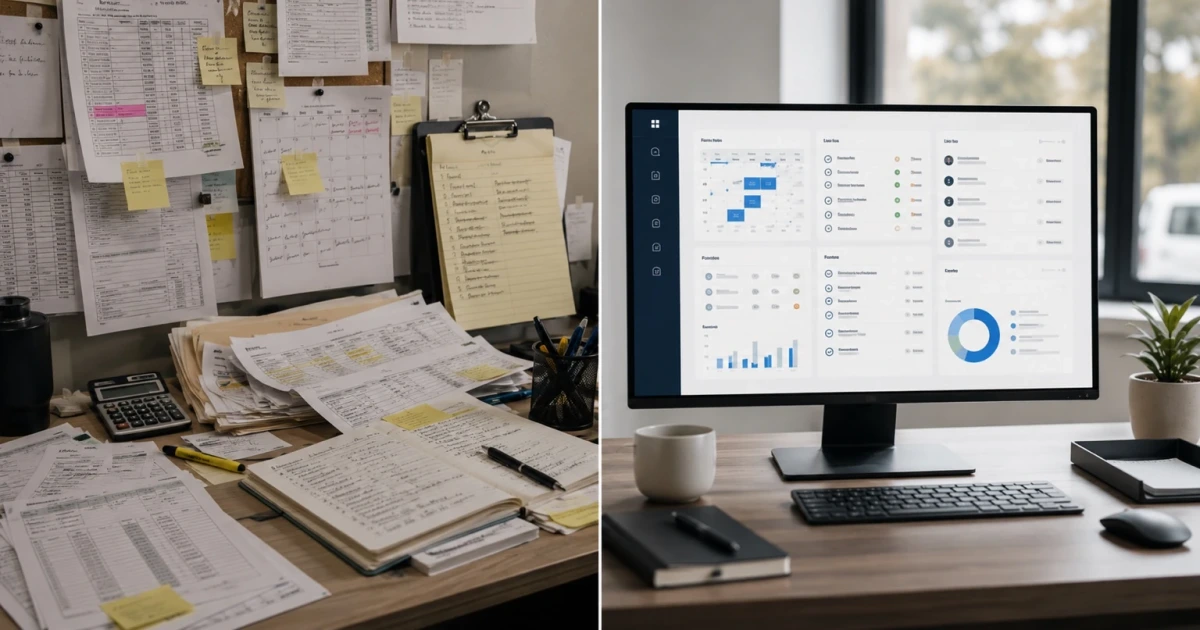
A spreadsheet is a fine tool for one person tracking a handful of jobs. It stops being enough the moment work has to move between people—and nobody agreed on whose job it is to move it.
 Systems & AI
API Integrations for Small Businesses: The Plain-English Version
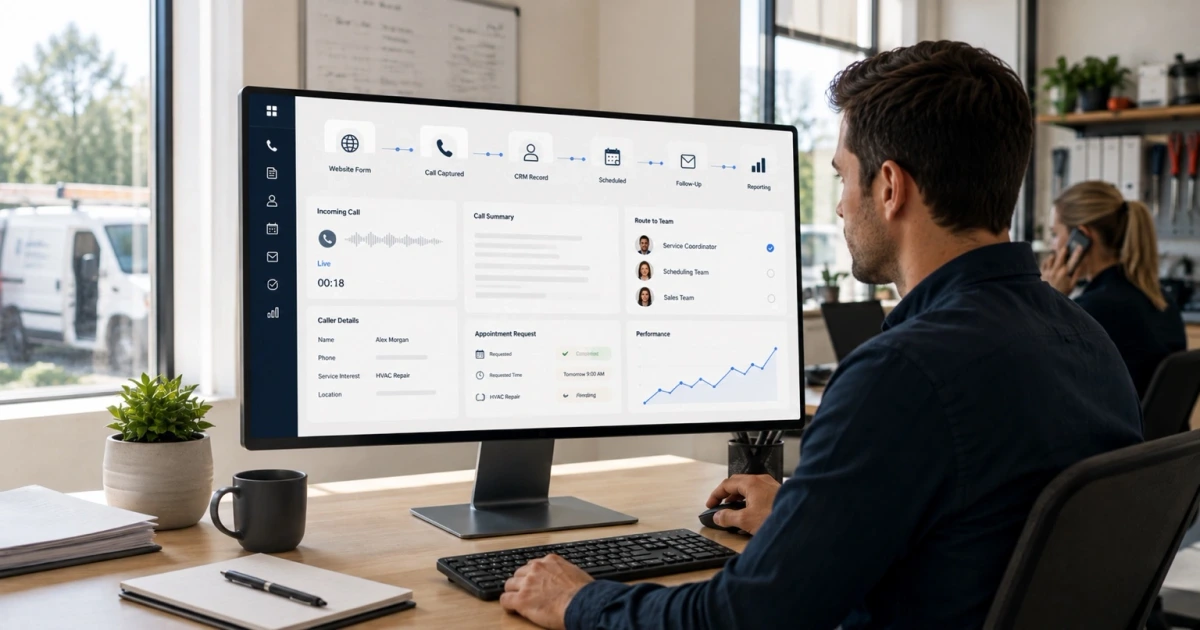
An API is just how one piece of software talks to another. When your website, phone, calendar, and CRM can talk, the work moves by itself. When they can't, a person moves it—and things get dropped.
 Systems & AI
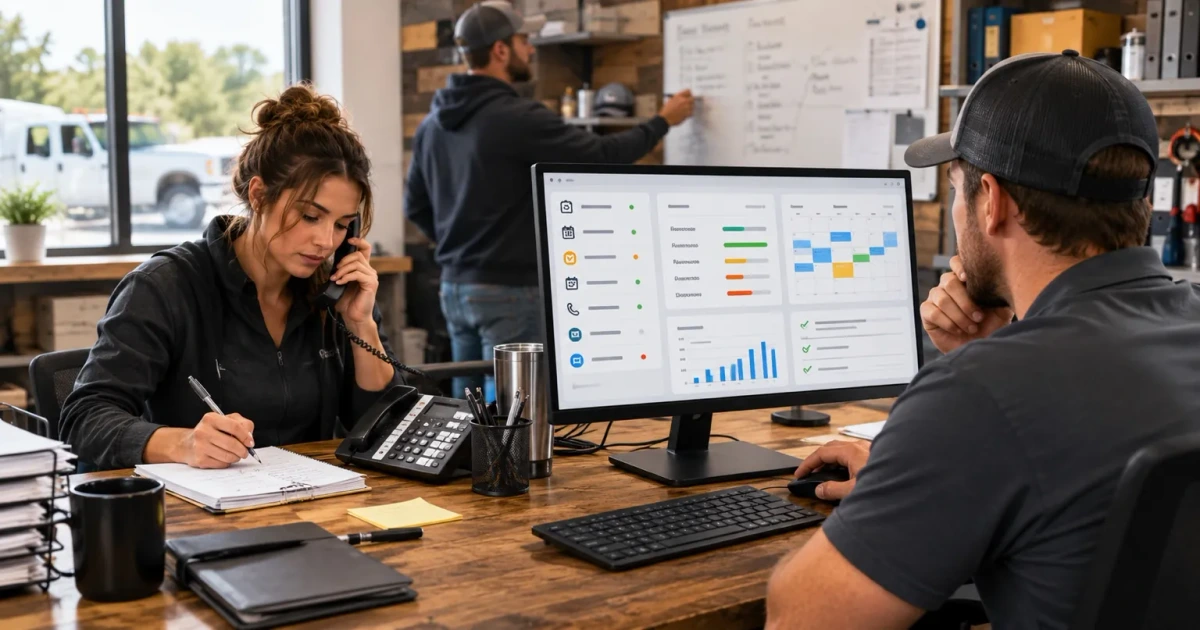
Business Automation Software Oklahoma: What to Automate First
Don't automate everything. Start with the one handoff leaking the most money—missed calls, slow follow-up, quote delays, calendar confusion, duplicate entry, or no-show reminders. Here's how to pick.
 Systems & AI
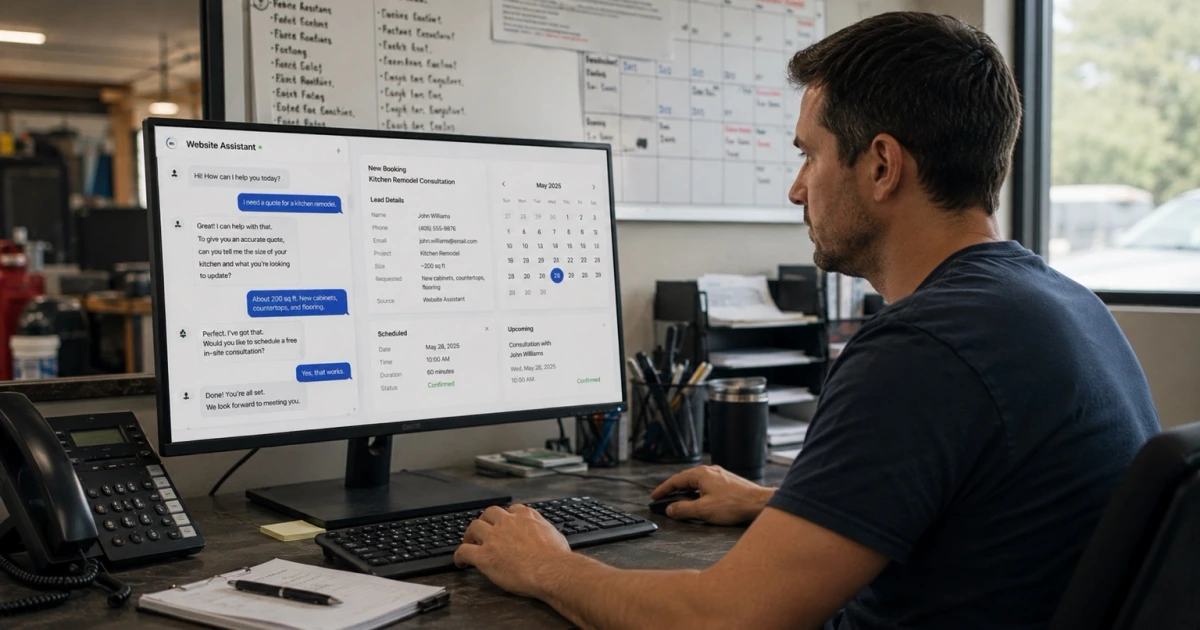
AI Chatbot vs AI Website Assistant: What Is the Difference?
A chatbot mostly answers questions. A website assistant qualifies, routes, books, summarizes, and hands off. Here's how to tell which one your service business actually needs.
 Systems & AI
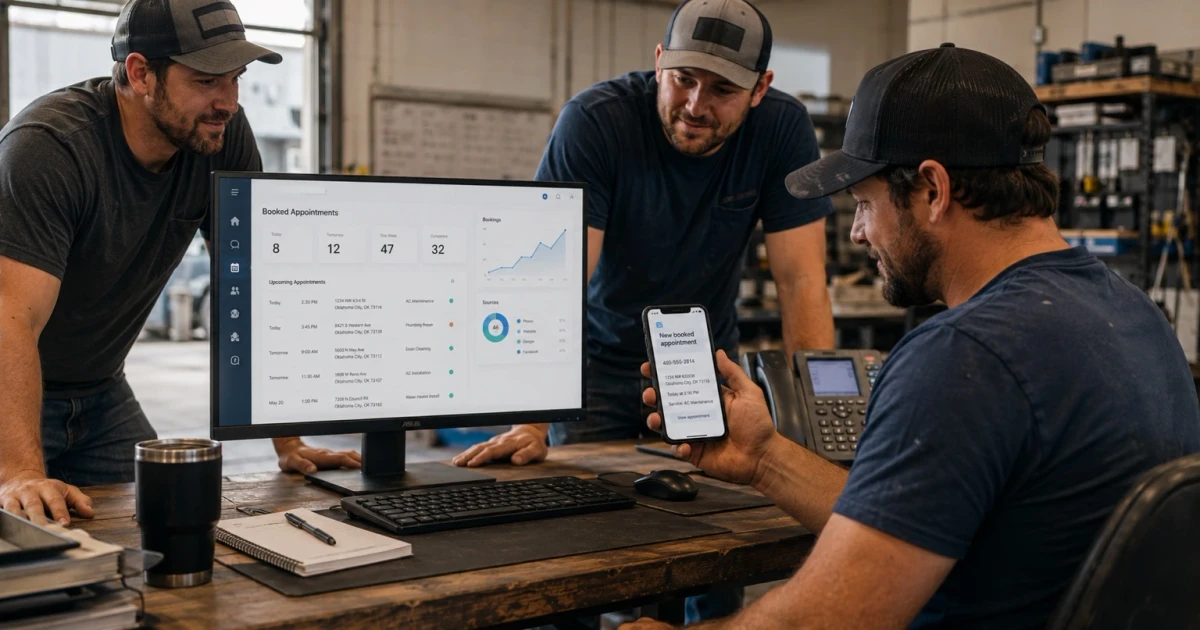
AI Receptionist Cost: What Drives the Price of AI Call Answering
An AI call answering system isn't just a voice that picks up. It runs the full flow—capturing the caller before, handling intake and routing during, and confirming, booking, and following up after. Here's how each stage works, and where a person still steps in.
 Systems & AI
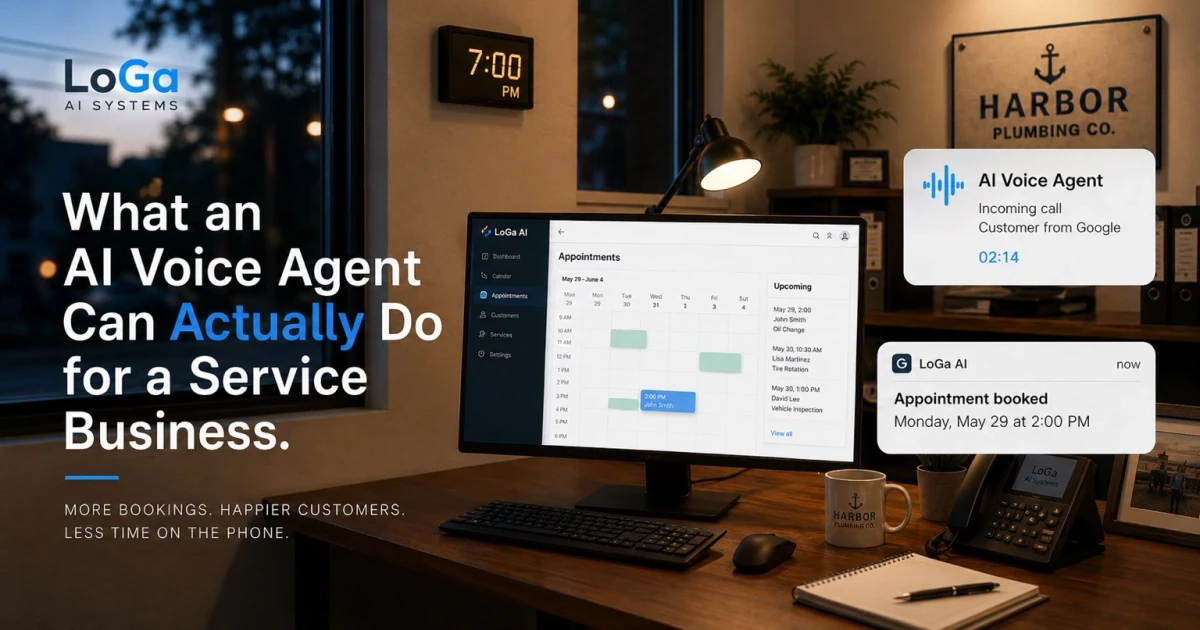
AI Receptionist for Contractors: What an AI Voice Agent Actually Does
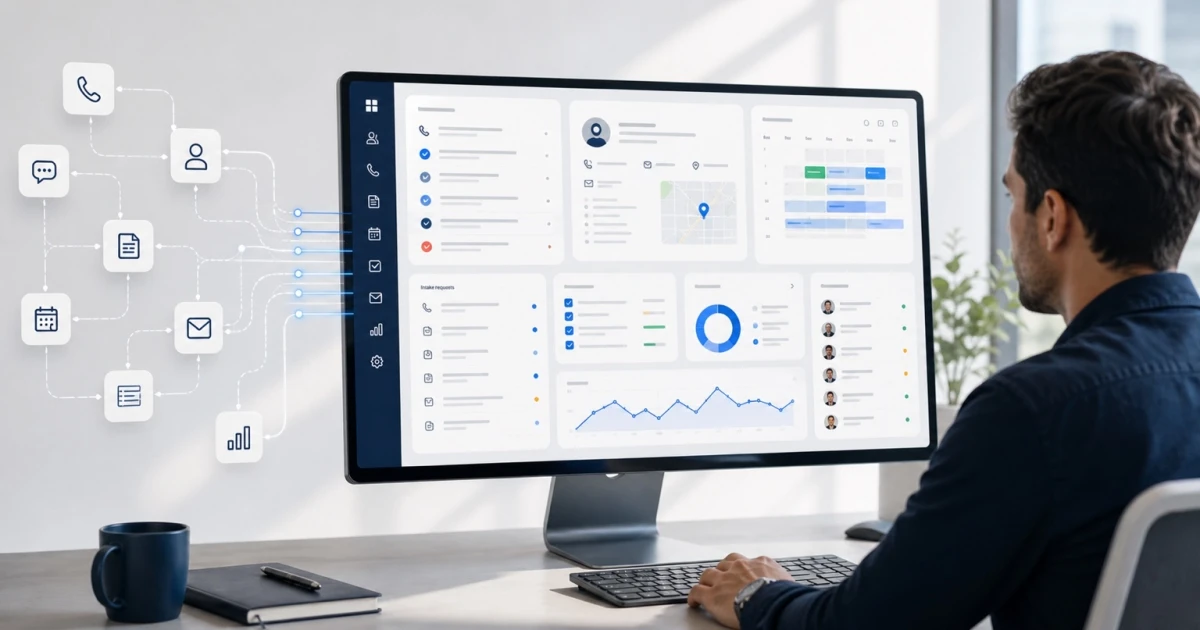
An AI voice agent won't replace your team, but it can capture callers, answer common questions, route urgent requests, and book appointments when no one can pick up. Here's what it does well, what it shouldn't do alone, and what it needs to connect to.
 Systems & AI
Custom AI Software vs Off-the-Shelf Tools: Which One Should a Service Business Use?
Off-the-shelf tools are the right call when the process is simple. Custom AI software earns its place when disconnected calls, forms, CRM, calendar, follow-up, and reporting start dropping leads. Here's how to tell which you need.
 Sports Systems
Missed Call Text Back: How to Stop Missing Customer Calls
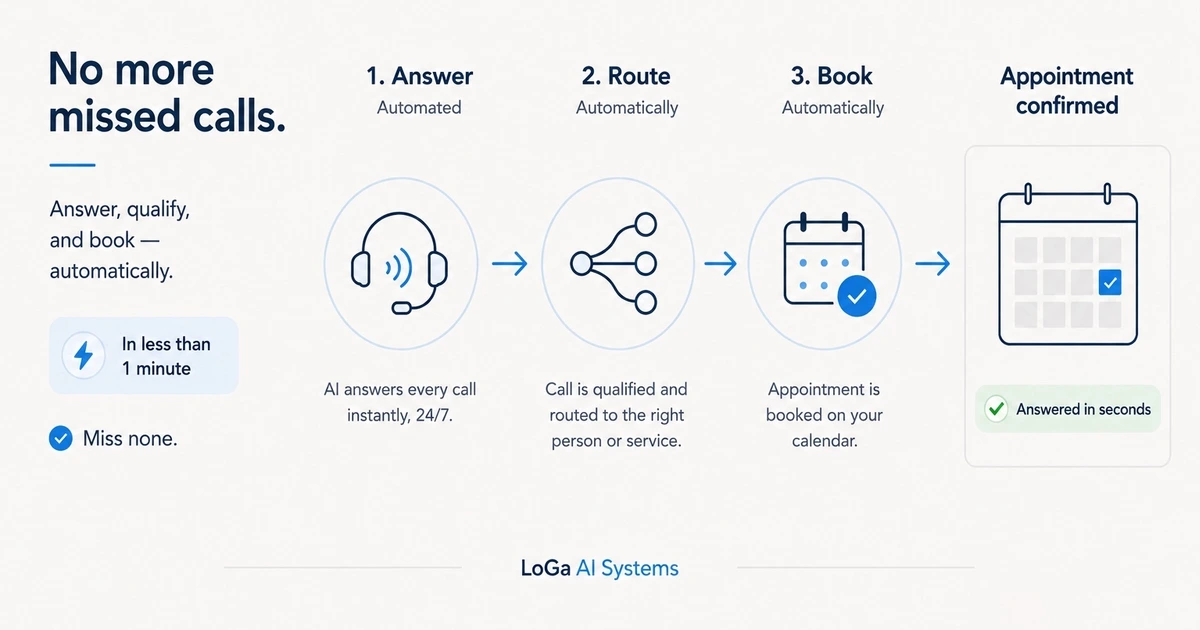
Missed calls are usually a systems problem, not a staffing problem. A custom intake system can capture, route, and book callers when your team cannot answer.
 Systems & AI
Custom Software Development Cost: What a Small Business Actually Pays
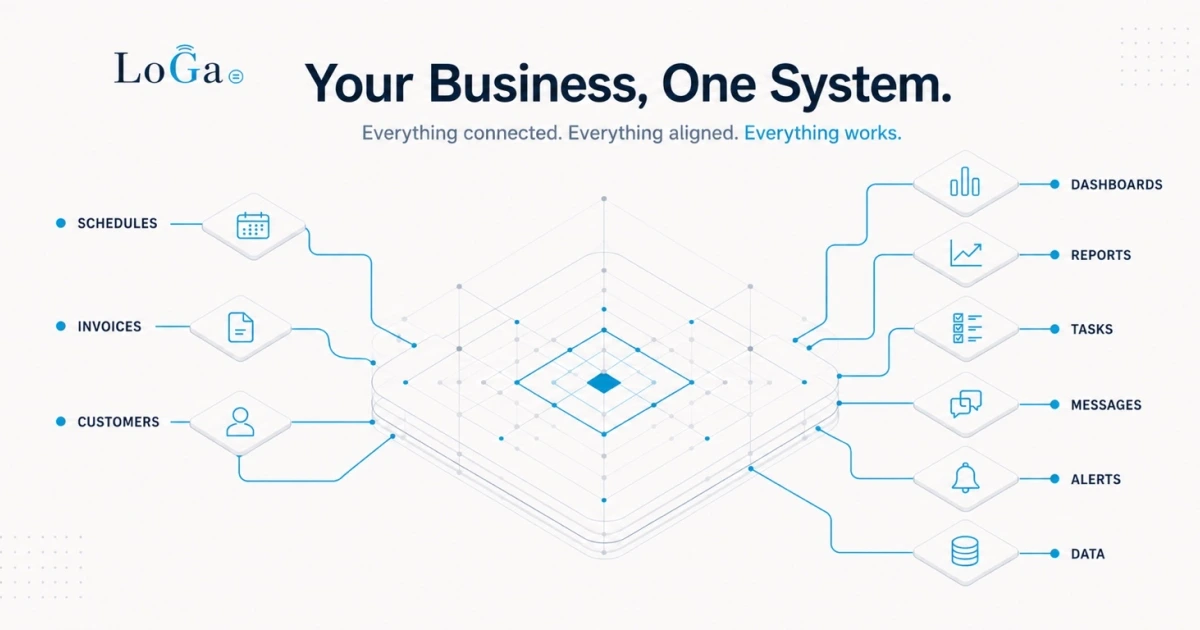
A straight answer to what a custom software system really costs a small business — a real range, what actually moves the price, and how to keep the first build small enough to pay for itself.
 Systems & AI
How to Automate Your Business With AI: Build a System, Not a Pile of Tools
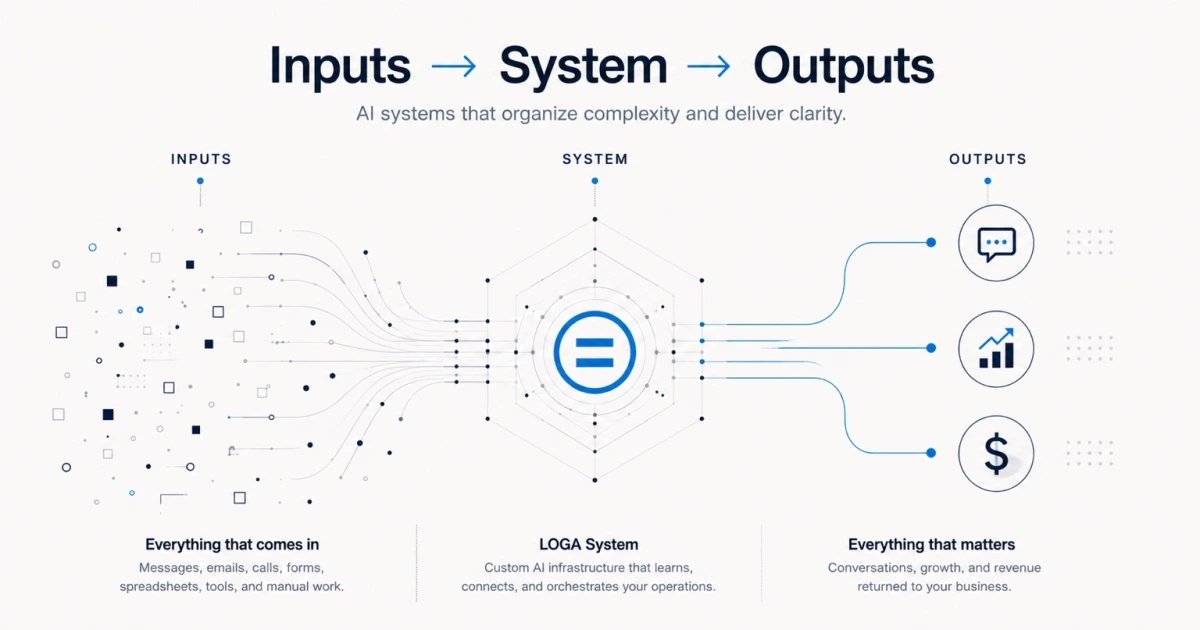
Being told you 'should be using AI' usually adds stress, not less of it. The fix isn't more tools — it's one system that runs the work for you, with AI handling the parts it's genuinely good at. Here's what to automate first.
 Systems & AI
Is Custom Software Worth It for a Small Business? An Honest Look
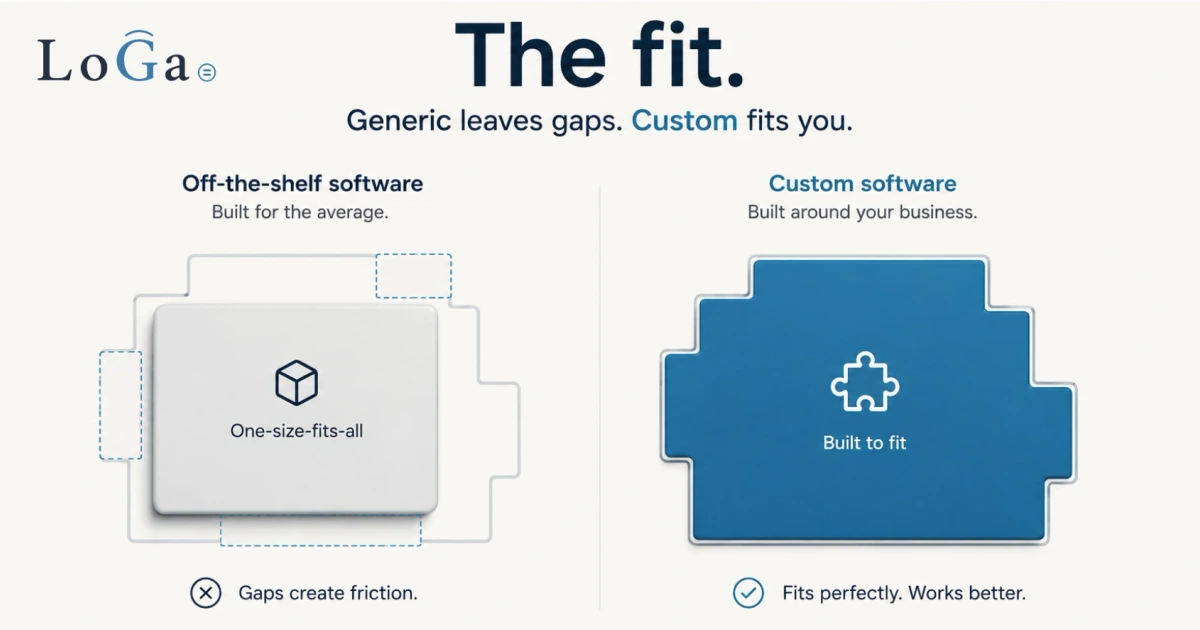
Custom software is a real investment — so when does it actually pay off for a small business, and when should you stick with off-the-shelf? An honest, operator's take.
 Sports Systems
Why Off-the-Shelf Software Stops Working as Your Business Grows
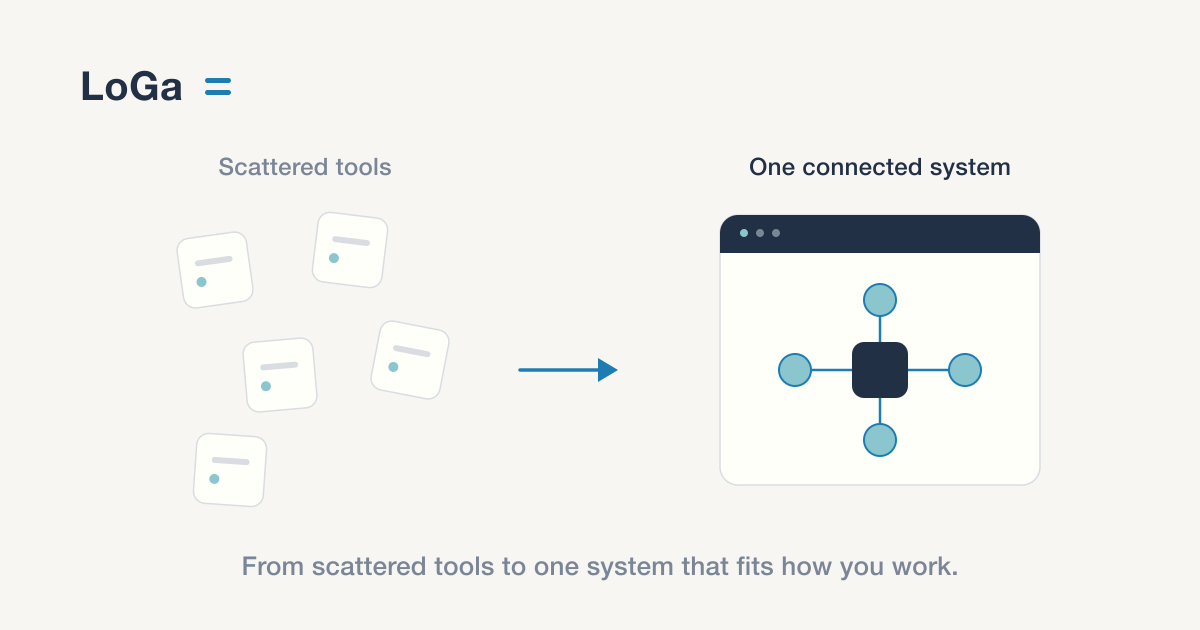
Your software works, but your team is quietly working around it. Here's how to tell when off-the-shelf tools have stopped fitting your business — and what a system built around you looks like.